
Infection control is often framed as a day‑to‑day operational task, the domain of hand hygiene, PPE, and rigorous cleaning regimes. But long before a clinician puts on gloves or a cleaner wipes down a surface, the built environment has already shaped the risk of infection. The way a facility is designed, ventilated, furnished, and maintained can either suppress pathogens or help them spread. Modern healthcare design is now recognised as a crucial frontline defence against infection transmission.
Many healthcare buildings were constructed for a very different era of medicine, with layouts, materials, and systems that no longer match modern infection‑prevention demands. As services evolve and patient acuity rises, these legacy environments can become hidden weak points.
Reducing infection risk requires architects, designers, engineers, and builders to work together with clinical teams and infection‑prevention specialists. Whether creating new facilities or upgrading ageing estates, the built environment must be treated as a core component of safe, resilient healthcare – not an afterthought.
It’s all in the design
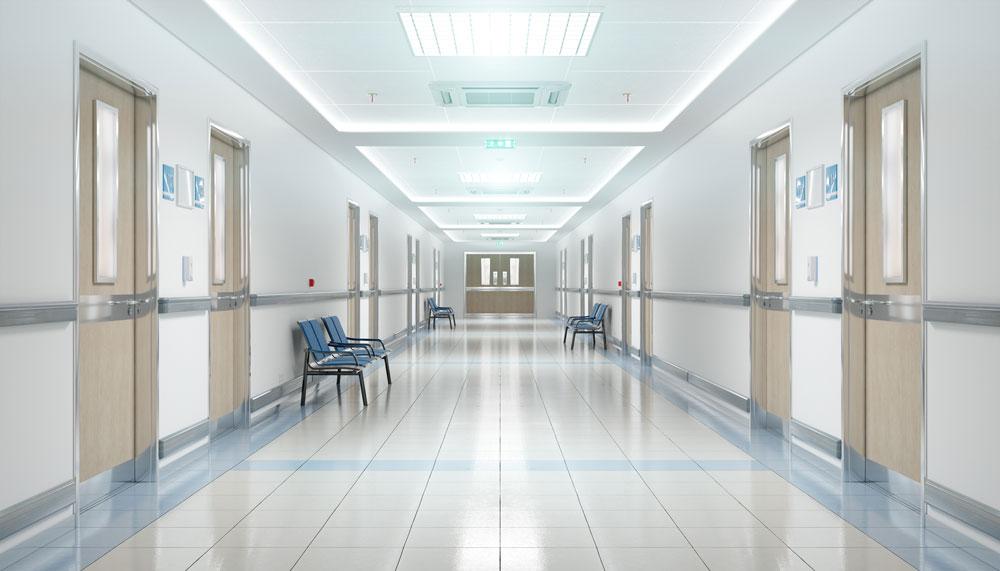
Reducing infection risk starts with the very fabric of the healthcare environment. Smooth, non‑porous, easy‑clean surfaces help limit microbial reservoirs and allow faster, more effective decontamination. This applies not only to touchpoints such as doors but also to furniture, where seamless, wipe‑clean designs with minimal joints prevent pathogens from accumulating.
Fast‑drying, durable flooring and wall finishes help rooms return to use quickly after deep cleaning.
Antimicrobial coatings on high‑touch surfaces offer an additional layer of protection, cutting down the bioburden between cleaning cycles. At the same time, touch‑free design – from automatic doors and sensor‑activated taps to hands‑free dispensers – reduces the number of contact points altogether, lowering the chance of transmission in busy clinical areas.
Integrated storage reduces clutter and makes cleaning more effective, while also minimising dust accumulation. Built‑in cable management prevents the tangles of wires that are notoriously difficult to disinfect.
One-way circulation routes can reduce mingling between high-risk and low-risk areas and isolation rooms close to admissions can help to contain potential outbreaks early. Zoning can help staff to maintain safe movement patterns.
Clear sightlines enable staff to monitor patients without having to enter a room unnecessarily. Glass partitions and observation windows can also support infection control whilst maintaining dignity and privacy.
Strategic placement of hand‑hygiene stations at “decision points” (entrances, ward thresholds, treatment rooms) can increase their use.
Ventilation, water and drainage
Ventilation is one of the most powerful environmental controls for airborne pathogens, and poorly maintained or outdated systems can significantly increase infection risk. Effective ventilation must deliver appropriate air changes per hour, maintain correct pressure differentials, and meet filtration standards to keep contaminated air from circulating through clinical spaces.
Good design also helps prevent the conditions that allow microbes to thrive. Eliminating damp corners, reducing condensation on windows, and ensuring bathrooms are properly ventilated all limit moisture build‑up, which can support microbial growth. Drainage design is equally important – particularly in wet rooms and clinical wash areas – as well‑engineered drains reduce splashback and aerosolization, both of which can spread pathogens.
Water systems present another critical area of environmental risk. If left unused or poorly maintained, they can harbour organisms such as Pseudomonas and Legionella, posing a serious threat to vulnerable patients. To minimise this, systems must be designed to avoid stagnation, dead legs, and temperature fluctuations. Regular monitoring, flushing, and engineering controls are essential to keep water safe and compliant.
Technology
Nowadays, technology plays a crucial role in reducing the spread of infection, adding a digital layer of protection to the built environment. Real time air quality sensors, automated temperature monitoring, and digital cleaning logs give estates and clinical teams a continuous picture of environmental conditions, rather than relying solely on periodic checks. These systems can flag issues such as falling air change rates, rising particulate levels, or missed cleaning cycles long before they become a risk.
Data driven alerts help facilities teams respond quickly to emerging problems – whether that’s a ventilation fault, a temperature fluctuation in a high risk area, or a water outlet that hasn’t been flushed. Increasingly, these tools integrate with wider building management systems, allowing teams to track trends, prioritise interventions, and demonstrate compliance with infection control standards.
Some organisations are also adopting predictive analytics, using historical data to anticipate when and where environmental risks are most likely to occur. This shifts infection control from a reactive process to a proactive one, where potential issues are identified and addressed before they affect patients or staff.
Retrofit v new build
There is a difference between retrofitting an existing building and starting from scratch to meet infection control measures.
There is a clear difference between retrofitting an existing building and starting from scratch to meet modern infection‑control standards. Building from scratch allows infection‑prevention measures to be integrated into the fabric of the facility from the very beginning, with layouts, materials and systems designed specifically to minimise risk.
Many older estates, however, were built long before today’s expectations around airflow, water safety and decontamination. Legacy materials, awkward layouts and hard‑to‑reach fixtures can be difficult to disinfect thoroughly, creating hidden reservoirs that undermine even the best cleaning regimes.
New builds offer the greatest freedom: layouts can be planned around clean and dirty flows, ventilation and water systems can be engineered to modern standards, and materials can be specified with infection prevention in mind from the outset.
Retrofitting brings its own constraints – legacy pipework, cramped plant rooms, awkward circulation routes and outdated materials can all limit what is possible – yet targeted upgrades can still deliver meaningful improvements. Enhancements to ventilation, drainage, surface finishes and touch‑free fixtures can be phased in with minimal disruption, helping older facilities meet contemporary infection‑control expectations while longer‑term redevelopment plans evolve.
Conclusion
Infection control will always rely on good practice, vigilance and the day‑to‑day actions of staff. But the built environment sets the baseline. When surfaces, layouts, ventilation, water systems and technology are designed to suppress risk rather than create it, every subsequent layer of infection prevention becomes more effective. Conversely, when buildings work against clinical teams, even the most rigorous protocols can only go so far.
As healthcare continues to evolve – with rising patient acuity, increasing antimicrobial resistance and growing pressure on estates – the case for embedding infection‑prevention principles into design has never been stronger. Whether through new builds that integrate best practice from the outset or targeted retrofits that strengthen older estates, the physical environment must be treated as a core component of safe care.