

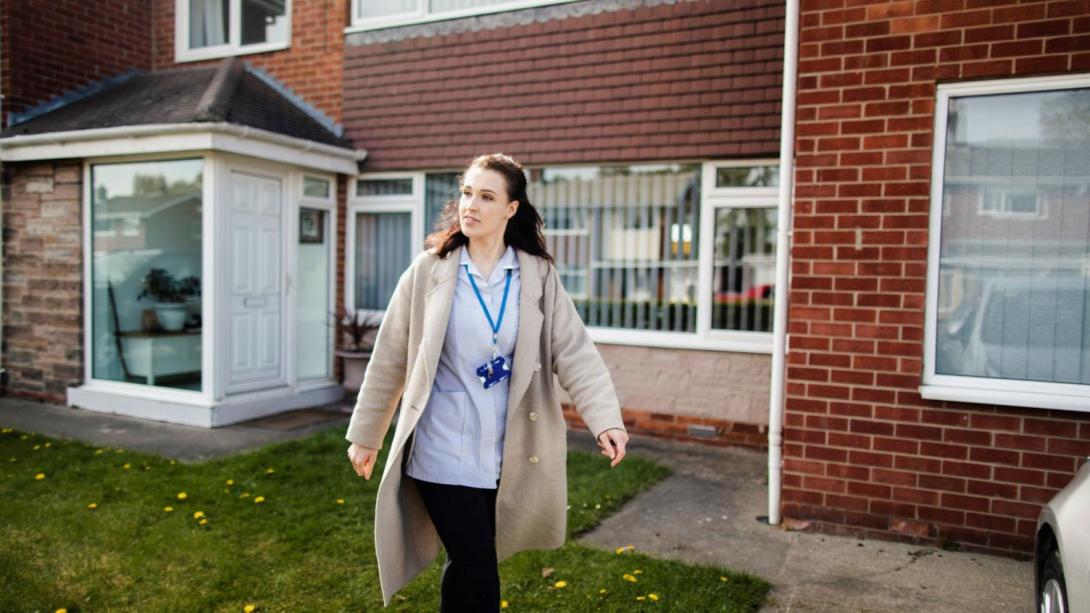
The NHS Confederation has stressed that patients are facing significant delays for key health services delivered in the community due to a mounting backlog of care.
Alongside NHS Providers, the NHS Confederation has expressed concerns that waiting lists for a range of community health services are increasing significantly, with community providers reporting significant impact on children and young people.
At the end of 2021, the backlog in community services was estimated at around one million and is likely to have grown as a result of efforts to tackle the Omicron variant.
The highest numbers and largest volumes of long waits are for community paediatric diagnoses, audiology and speech and language therapy. One community provider said it has seen a 300 per cent increase in referrals to consultant-led child development services over the last five years, and this has been exacerbated by the pandemic.
Leaders from community providers fear that inevitable delays will exacerbate health inequalities and risk having an enduring impact on those children left waiting. Although long waits for adults remain a concern, long waits can impact outcomes for children much more severely.
Community leaders would like support and cover to make addressing health inequalities a priority feature in how they tackle waiting lists going forwards, building on recent initiatives to cut elective waiting time data in a similar fashion.
The NHS Confederation and NHS Providers are calling for a whole system approach to recovery, and an acknowledgement that support to address backlogs in the community sector will be key to recovery across the whole health and care system. The organisations argue that this must become a priority for the government in its post-Covid-19 recovery planning.
Matthew Taylor, chief executive of the NHS Confederation, said: “Before we faced the Omicron wave, the majority of community services had recovered to pre-Covid levels of activity or higher. But even then, many community providers said it would take most services at least six months to clear the backlog, with some predicting it would take three to five years. The pressures of recent months have made the recovery challenge even harder, with a disproportionately high number of children and young people now waiting for treatment.
“We need a properly resourced plan that treats this community backlog with the same energy and urgency as the government is treating the elective care backlog. Otherwise we risk condemning patients to lengthy waits and storing up problems that could have been dealt with in the community that end up landing at the door of GP practices, A&E departments and other urgent and emergency care services.”
Chris Hopson, chief executive of NHS Providers, said: “Community services are essential in supporting and caring for people at home or in community based settings to support rehabilitation after a stay in hospital, rebuild confidence and independence, and prevent readmission unnecessarily. As such they sit at the heart of a system wide offer of health and care, and at the heart of the NHS’ recovery from the pandemic.
"The intrinsic value of these services was proven during the height of the pandemic when community providers supported the NHS to free up 30,000 additional beds for patients requiring acute hospital care.
“There is no doubt the pandemic, and mostly recently the Omicron wave, has piled pressure on community services. While clear national data does not exist to make this fact inescapable to policymakers, leaders of those services have told us just how difficult it has become to meet rapidly rising demand. They will need to be integral to a properly resourced plan for recovering backlogs in this critical part of the health service.”