

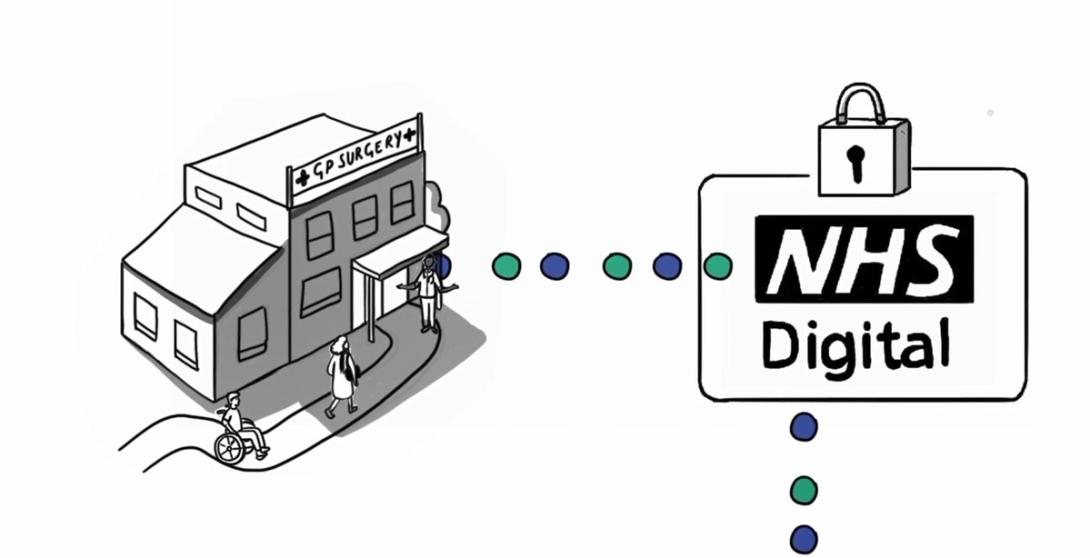
NHS Digital has introduced a new service to collect primary care data more efficiently and make it available for better planning of healthcare services and for use in medical research.
NHS Digital has been collecting data from GPs to meet bespoke data requests for these purposes for over ten years, through its trusted General Practice Extraction Service (GPES). This system is now being replaced with their new General Practice Data for Planning and Research (GPDPR) service, a broader general-purpose collection which will enable faster access to pseudonymised patient data for planners and researchers.
NHS Digital has now issued a Data Provision Notice to GPs to enable this new and improved data collection process to begin from 1 July.
The coronavirus pandemic led to a significant increase in the need for GP data from NHS Digital to support clinicians, researchers, academics and commissioners. It has been used by NHS organisations and researchers to help run and improve health and care services. This includes identifying those most vulnerable to coronavirus, rolling out vaccines, and for critical coronavirus research, including the University of Oxford’s RECOVERY trial which identified that treatment with dexamethasone improves the chances of survival for people hospitalised with the virus.
To support these needs, NHS Digital was legally directed to collect and analyse healthcare information about patients, including from GP records, for the duration of the coronavirus emergency period. The current collection system (GPES) performed adequately during the pandemic but is based on legacy technology.
As we emerge from the pandemic, but into an era of enormous demand for NHS services, data will continue to be a critical asset in planning services and facilitating research into conditions such as long Covid. Therefore, NHS Digital has been legally directed by the Secretary of State for Health and Social Care to establish a new strategic system to collect and provide access to near-real-time data from GP Practices for planning and research purposes.
The new GPDPR system has been designed to the most rigorous privacy and security standards, to meet patient expectations with regards to the confidential management of patient data. The new system will improve efficiency in data collection from GP practices, and significantly increase the speed and efficiency of providing appropriate access to that data, reducing the burden on GPs. Patients can have greater confidence that their data is being used in ways which preserve their confidentiality, as a result of the rigorous, standardised and unified approach to data management and access.
Sarah Wilkinson, NHS Digital CEO, said: “The power and utility of health data was clearly demonstrated during the pandemic, where it supported NHS organisations and researchers to roll-out vaccines, identify those most at risk from Covid-19 and investigate disease pathology, amongst other things.
“General Practice data is particularly rich and valuable because many illnesses are treated predominantly in primary care. We want to ensure that this data is made available for use in planning NHS services and in clinical research, but it is critical that we do this in such a way that patient confidentiality and trust is prioritised and never compromised.
“We have therefore designed technical systems and processes which incorporate pseudonymisation at source, encryption in transit and in situ, and rigorous controls around access to data to ensure appropriate use. We also seek to be as transparent as possible in how we manage this data so that the quality of our services are constantly subject to external scrutiny. I am proud that NHS Digital is making NHS data work for all of us who depend on the NHS.”