
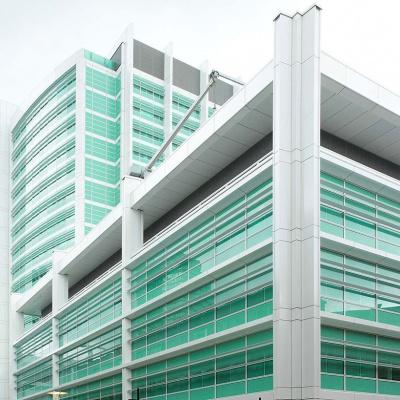
University College London Hospitals is making a commitment to reduce its impact on the environment with a 10-point plan to reach net zero carbon dioxide emissions in 10 years.
Declaring a climate and health emergency, the commitment builds on progress made since UCLH’s Green Plan was put in place in 2020. The plan has seen investment of more than £2.5 million in a programme to: install low energy LED lights; switch to sustainable electricity and recycled paper; reduce patient journeys by 50 per cent; reduce the use of the most harmful anaesthetic gas by 90 per cent; and engage staff to take part in climate action schemes.
With support from Global Action Plan and Camden Council, UCLH is also working to improve air quality by holding workshops with staff to promote green travel, such as using public transport and walking or cycling rather than driving. More recent initiatives include a pedometer challenge and a bike user group to promote cycling.
The 10-point plan commits UCLH to cutting energy emissions by 80 per cent by 2025. UCLH will achieve this by only using renewable electricity, having switched energy provider to sustainable company Haven Power. The hospital is installing solar panels throughout it’s buildings, and has installed LED lights at five sites with more sites to follow in the coming months. The new lighting uses 70 per cent less energy than the current lights, meaning the organisation is already saving more than 1,200 tonnes of CO2 every year.
Additionally, UCLH is cutting down the amount of plastics in use at the hospital, including encouraging patients and staff to stop using polystyrene cups and instead bring in reusable ones.
Procurement will be focused on buying green, with all procurement to include a 10 per cent weighting to sustainability.
UCLH’s service partner Mitie is supporting the vision to improve recycling by installing new equipment, changing their waste management contractor, increasing communication about correct waste streams and organising joint waste road shows. This has caused better recycling rates, with a dramatic increase of mixed recycling from 38 per cent to 49 per cent in three months last year. The organisation is on course to hit its current recycling target of 80 per cent by 2025.
Luke O’Shea, UCLH director of innovation, said: “The climate is changing and sadly time is running out to act. It is staggering to think that 19 of the last 20 years have been the hottest on record. The NHS creates 40 per cent of public sector emissions, five per cent of the UK total. Spurred on by the NHS’s drive to reach a net zero target by 2040 and an 80 per cent reduction by 2028 to 2032, we at UCLH have a plan, but will go further and faster, aiming to be net zero within ten years - by 2031.”