
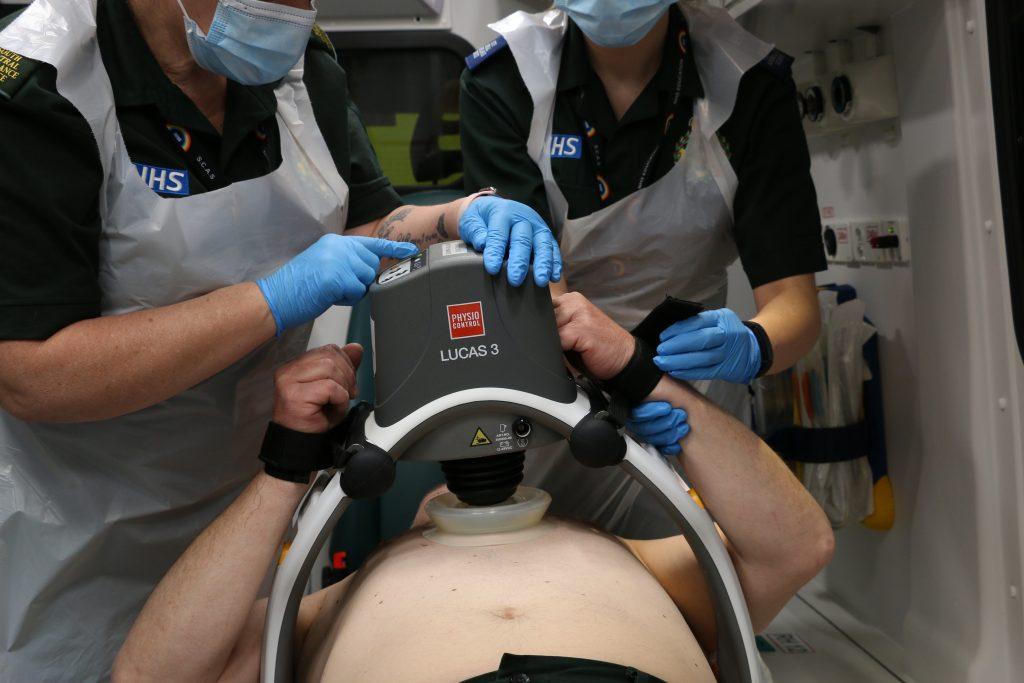
South Central Ambulance Service is the first in the country to rollout a new device which can perform CPR on a patient automatically – freeing up paramedics to carry out other vital interventions.
Known as LUCAS 3, the technology is a mechanical system which can deliver high quality chest compressions consistently from the moment crews arrive on scene and throughout a patient’s journey to hospital without interruption.
The rollout of the new equipment has been made possible by South Central Ambulance Charity, which is funding 28 of the devices to support crews across Oxfordshire, Berkshire, Buckinghamshire and Hampshire. It comes complete with wireless Bluetooth connectivity which makes it possible to configure compression rate, depth and alerts specific to an organisation’s resuscitation guidelines. It also means it can collect data which can be reviewed post-event and shared with other clinicians.
Emergency services attempt resuscitation in around 30,000 cardiac arrests outside of hospital in the UK every year.
Once paramedics arrive and begin CPR or take over from bystanders who may have initiated it, the transition from manual compressions to LUCAS can be completed within seven seconds, ensuring continuity of compressions.
Dr John Black, Medical Director at SCAS, said: “We know that delivering high quality and uninterrupted chest compressions in cardiac arrest is one of the major determinants of survival to hospital discharge but it can be very challenging for a number of reasons. People can become fatigued when performing CPR manually which then affects the rate and quality of compressions and patients may need to be moved from difficult locations, such as down a narrow flight of stairs, or remote places which impedes the process.
“There are also significant safety risks to ambulance personnel being unrestrained and performing CPR in the back of vehicles travelling at high speed. These devices don’t fatigue or change the delivery in any way, meaning high quality CPR can be delivered for as long as is required while freeing up the paramedic, keeping them seated and belted and able to focus on other critical aspects of patient care on a journey. It ultimately acts as a robotic third crew member for our teams.”