
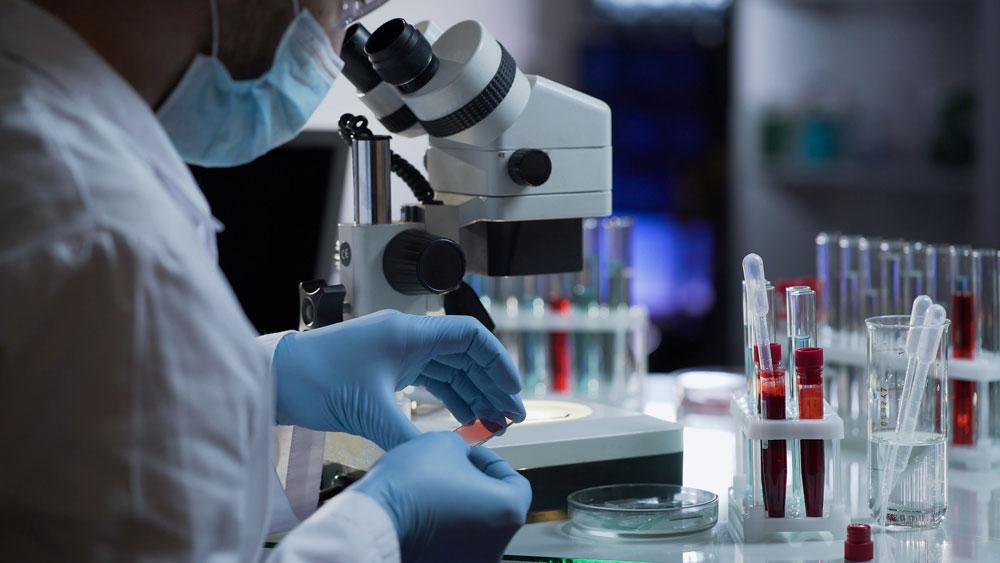
NHS is the first in the world to roll out a ‘revolutionary’ blood test, which will allow lung and breast cancer patients to access targeted treatment, like chemotherapy, much earlier.
The new ‘liquid biopsy’ test will be able test for suspected lung and breast cancer, with the test to be used before traditional tissue biopsies, as it detects tiny fragments of tumour DNA in the blood. The blood test can search for specific genetic variations of cancer, which allows patients to access targeted therapies that are tailored otherwise the genetic profile of their cancer.
A successful pilot has meant that NHS England has announced 15,000 patients with suspected lung cancer could now benefit from the test each year, as well as around 5,000 women with suspected breast cancer.
It is available for all eligible lung and breast cancer patients in NHS hospitals across England, with patients with advanced breast cancer that has not responded to previous treatment able to receive a liquid biopsy to uterine if they are eligible for targeted treatments.
An independent health economic assessment of the pilot estimated the test could save the NHS up to £11 million per year in lung cancer care, and the NHS is looking into using the liquid biopsy for other cancers, such as pancreatic and gallbladder.
Professor Peter Johnson, NHS national clinical director for cancer, said: “Liquid biopsies are leading us into a new era of personalised cancer care and its fantastic that we are now able to expand the use of this revolutionary test on the NHS to help tailor treatment for thousands of patients across the country.
“Cutting-edge genomic testing is helping us deliver more targeted and kinder care for patients, enabling some to avoid more intensive treatments such as further chemotherapy, which can have a huge impact. We are already seeing the difference this test can make in lung and breast cancer—and we hope to roll it out for patients with other forms of cancer in the near future.
“As research progresses, its exciting that this approach has the potential to help us ‘scan’ the body in a single blood test to see where and how cancer may be developing and target it with speed and precision to help save more lives.”