
A new independent report sets out the key roles pest professionals have to play in protecting public health, writes Rosina Robson, chief executive of British Pest Control Association (BPCA)
The No Small Matter report by Pragmatix Advisory found that professional pest management functions as a form of preventative public health intervention, reducing the likelihood of disease outbreaks, foodborne illnesses and environmental contamination.
Commissioned by BPCA, the study also estimated that pest management firms attended over 4.4 million client jobs in 2025 – more than 12,000 every day, across homes, high streets, warehouses, farms and industry in every region of the United Kingdom.
The report confirmed what is already widely accepted within the industry, which is that professional pest management is vital to limiting public health risks and protecting essential infrastructure such as hospitals, schools and transport networks.
Professional pest management
Despite being a small sector, pest control has a significant footprint, and the work of a pest management professional can take many forms, from protecting food supply and maintaining housing standards to supporting business continuity.
However, much of the preventative work in the sector is invisible because its value lies in avoiding disruption before it occurs, which can sometimes obscure the skills and knowledge deployed.
The report found that, despite its importance, pest management remains widely perceived as a reactive and problem-focused service, rather than a role that requires technical skill and environmental judgement to protect public health.
As a result, the sector is sometimes overlooked in policy discussions.
Pests in housing
Many common urban and rural pests act as vectors for pathogens, contaminating food, water and living environments – and therefore increasing the risk of infectious disease and allergic illness.
These pathogen pathways can be interrupted by professional pest control, limiting the scale of possible outbreaks and protecting vulnerable groups such as children, older people and those with existing health conditions.
Residential pest control makes up 31 per cent of all client jobs, however, shrinking access to Local Authority pest control services is increasingly a concern.
Access to professional services can be most limited where the need is greatest. Lower income areas see greater pest risk, and lack of publicly funded services creates an additional barrier for householders that are already under financial pressure.
Many pest professionals are alert to this problem, with some attempting to bridge the gap in provision by offering pro-bono work or reduced rates for vulnerable families and charities.
In areas with a higher resident turnover, pest control services can be disrupted as residents leave before treatment is complete, allowing infestations to re-establish, spread and escalate, increasing health risks and placing further pressure on already vulnerable communities.
Pests in business
Thousands of businesses and public services rely on pest management to operate safely and legally.
A breakdown of activity shows that 64 per cent of client jobs are reactive, meaning they are a response to an identified pest issue or infestation, with 32 per cent representing a significant infestation or emergency response.
And, while around 26 per cent of clients could face legal action or an enforcement notice in the absence of pest control, currently, only 36 per cent of pest control work carried out is preventative.
By avoiding infestations before they take hold, preventative pest management helps to avert operational disruption, regulatory breaches, reputational damage and public health risks that could result in far greater costs further down the line.
On average, pest control is estimated to help businesses avoid an average of £2,000 in direct costs, with a further saving of £700 in cases with early intervention.
Nationally, that equates to a saving of £1.9bn for businesses each year, with the pest control sector also contributing a further £1bn in gross value added to the UK economy.
For some businesses, such as those operating in food services, pest control is vital to ensuring compliance, yet less than 50 per cent of food businesses invested in preventative pest control in 2025.
The value of pest proofing and prevention
Despite its contribution to the economy, the sector’s real value lies not in responding to infestations once they occur, but in preventing incidents that could otherwise lead to closures, financial loss or hygiene failures.
If pest control ceased to exist tomorrow, pest issues wouldn’t just rise, they would escalate rapidly – and recent regulatory changes that have narrowed the range of pest management options available to professionals, have prompted concerns across the industry around the ‘shrinking toolkit.’
Currently, pest professionals are undertaking prevention work across homes, businesses and key spaces such as schools and hospitals as part of the wider public health infrastructure, rather than simply responding once harm has already occurred.
They are actively helping to prevent disease and support environmental safety, maintaining hygiene standards and managing wildlife hazards.
And, where an infestation has taken hold, pest professionals such as BPCA members have the skills, knowledge and experience to tackle the problem safely and effectively.
BPCA member businesses are endorsed by the Government via the TrustMark quality scheme as they must carry the correct insurances and are trained and qualified technicians who are assessed to the British Standard in pest management EN 16636 and follow BPCA’s Codes of Best Practice.
Future risks
Although pests are not always specifically included in public health planning, the spread of disease via animals and vectors is embedded within broader biological and public health risk frameworks and, looking ahead, there are a range of structural and environmental pressures that may increase the frequency and complexity of pest-related risk.
Intersecting pressures of animal-associated disease and climate change create the potential for pest-related risks to evolve over the coming decades.
Rising temperatures and changing weather patterns are projected to influence the geographic range, seasonality and population dynamics of pest species and disease vectors, with knock-on effects for human, animal and plant health risk pathways.
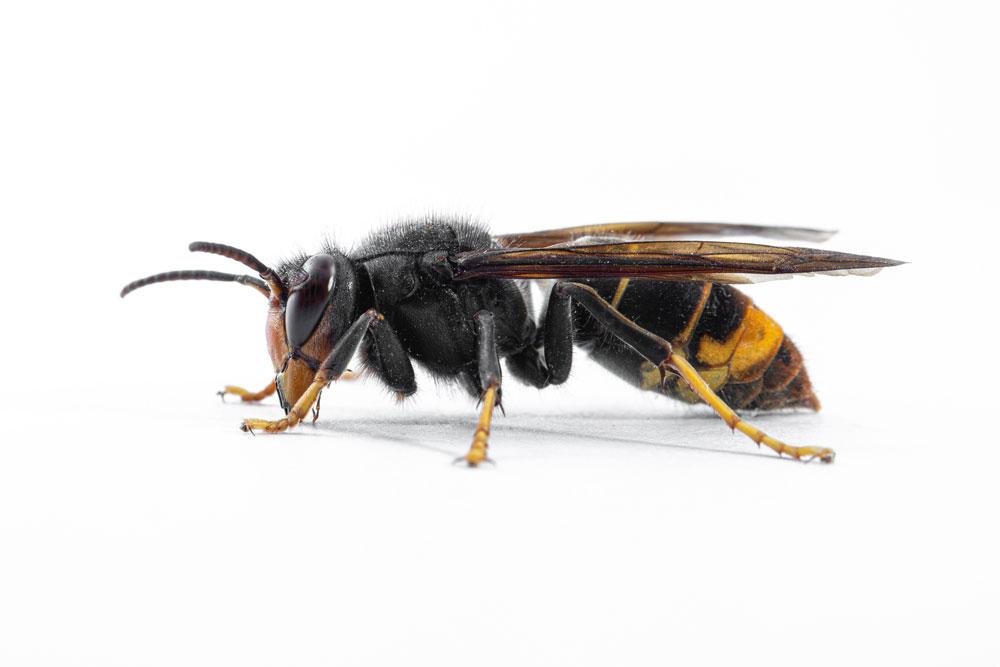
The Yellow-legged (Asian) hornet was first sighted in the UK in 2016. As of July 3, there have been 34 sightings so far this year, and while the health risks for humans from the YLH are largely aligned with a sting from a native hornet, the potential impact on our native eco-systems, particularly for the populations of honey bees on which they feed, is of extreme concern.
The UK Health Security Agency (UKHSA) has revealed that eggs from the Egyptian mosquito (Aedes aegypti) were discovered for the first time in the UK in September 2023 in a surveillance trap at Heathrow Airport, while Asian tiger mosquito (Aedes albopictus) eggs were found for the first time since 2019 at a service station on the M20, Kent, in August 2024.
There is no evidence these species have become established, but both Egyptian and Asian Tiger mosquitoes are vectors of diseases including dengue fever, chikungunya and Zika virus.
While the precise impacts are difficult to quantify, emerging risk trends suggest that the role of pest management in supporting health protection, economic continuity and infrastructure resilience is likely to become more prominent over time.