

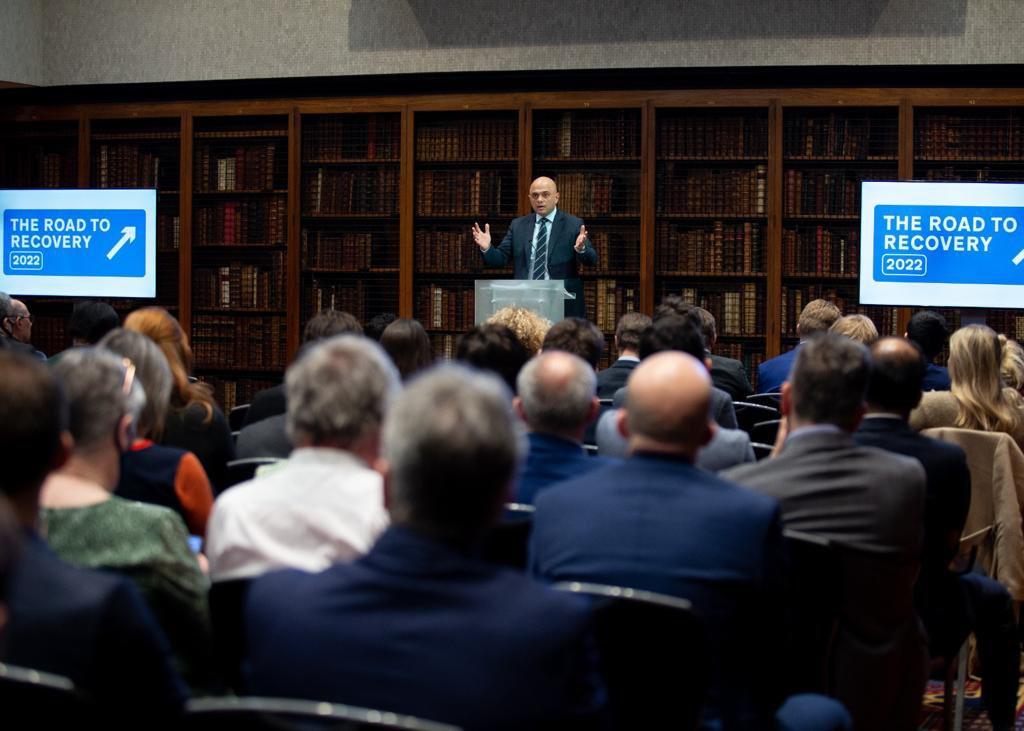
Health Secretary Sajid Javid has delivered a speech on healthcare reform at the Royal College of Physicians, London, stating that the NHS has a lot to do to stop people becoming unwell in the first place.
Javid used the speech to outline some of the challenges currently facing the NHS, including: how to keep the NHS focused on delivery while futureproofing it for changing demographics and disease; how to meet rising patient expectations and address the injustices of widespread disparities; and how to deal with an unsustainable financial trajectory while backing staff.
He said that all three challenges, changing demographics and disease, changing technology and expectations, and unsustainable finances, either lead to ‘endlessly putting in more and more money, or reforming how we do healthcare’.
Alongside the 2019 NHS Long Term Plan and the Health and Care Bill, currently before Parliament, the Health Secretary stated his intention to carry out the ‘most comprehensive reform plans that this country has ever seen’. The agenda will build upon foundations laid by the Integration White Paper and the Elective Recovery Delivery Plan to tackle the Covid backlogs, continuing the ‘flow from the increasingly patient-centred and systems-based working through the Integrated Care Systems’.
The plans laid out by Javid are summarised in three areas: prevention, personalisation and performance.
On the first point, Javid said that a focus would be to shift to a new mode of operating – one that’s about helping the whole population to stay healthy, not just treating those who show up asking for help. This can only be tackled across government departments, including local government and social care providers, with a new Health Disparities White Paper pledged for publication later this year to help prevent disease and reduce deep-seated inequalities.
The Health Secretary made a commitment to put prevention at the heart of how ICSs are held to account in the future. There will be an expectation that NHS England and individual ICSs commit to joint delivery plans to reduce the biggest preventable diseases – starting with cardiovascular disease, but in time, expanding to include diabetes, cancer, and poor mental health. Prevention will also be at the heart of the NHS App, making it the front-door for preventive tools and services – like a new digital health check.
People with long-term conditions, which can be managed but not cured, account for half of all GP appointments, two-thirds of outpatient appointments and inpatient bed days, and two-thirds of all health and care spend in England. As such, the Department of Health and Social Care is promising that as many as four million people will benefit from personalised care by March 2024, covering everything from social prescribing to support plans.
There is a current target for 200,000 people to have a personal health budget by 2024, but Javid said that he wants to see a significant expansion in the coming years.
On personalisation, the speech also touched on the Shared Lives scheme, where people in need of care go to live with carers and become like any other member of the family. The government will work with local authorities to expand the model, making sure it is available for more people across the country.
Javid went on to declare a new ‘Right to Choose’, initially including more active discussions between professionals and patients as well as a better offer to long-waiters: moving to a model where long-waiters will be offered the ‘right to choose’, proactively contacted to discuss an offer of alternative provisions.
In numbers, by the end of December, people who are at risk of waiting 78 weeks will be contacted first. For the trusts with the highest number of long waiters, and those who have been waiting more than two years, they will be contacted by the end of this month.
This Spring, the Department of Health and Social Care will also publish its first ever comprehensive Digital Health and Care Plan, which is also the very first to span social care too.
On performance, the Health Secretary set the ambition for electronic records to be rolled out to 90 percent of trusts by December 2023, and 80 percent of social care providers by March 2024.
Ministers are also expecting to explore what NHS trusts working in such partnerships could do with greater freedoms.
Andrew Goddard, president of the Royal College of Physicians, said: “The Secretary of State’s focus on preventing ill health is welcome. He is right to say that the health of the population and the health of the economy go hand in hand and that this means reducing health inequalities. We eagerly await the disparities white paper and how the Health Promotion Taskforce will achieve this.
“However, change of the kind the Secretary of State advocates requires planning, particularly when it comes the size and nature of the NHS and social care workforce. The Secretary of State’s acknowledgement that there will be no additional funding to support this brings clarity but this will undoubtedly make the challenge all the greater. The government must accept the amendment made by the House of Lords last week, which would see regular independent assessments of how many doctors and other health care staff we need to meet demand now and in the future.”
Hugh Alderwick, head of Policy at the Health Foundation, said: “Involving patients in decisions about their care is a good objective – and has been NHS policy for many years. Choice of hospital can benefit some patients, but there is a risk of widening inequalities if the new scheme helps some more than others – such as those living in richer areas with more private hospitals. Patients in poorer areas have seen more disruption and delays to care during the pandemic. Addressing inequalities should be at the heart of any new plans for NHS reform.
“More choice over where to get NHS services is no replacement for having enough staff and capacity to deliver them. The biggest challenge facing the NHS right now is chronic staffing shortages. The NHS is currently short of around 100,000 staff, yet government has no long-term plan for expanding and supporting the workforce. A fully funded workforce strategy is essential to tackle the growing backlog for NHS care.
“The proposals also come off the back of a raft of other plans to reorganise NHS structures and integrate services. The secretary of state’s new vision for the system will need to tie these strands together into a coherent narrative to avoid confusion about the direction of NHS reform.”